How AGIBOT’s Seven Solutions Are Reframing the Commercialization of Embodied AI ?

20260509-140718.jpg


As embodied AI moves from research labs into real-world environments, the industry is confronting a challenge that goes beyond capability: deployability.


For years, robotics companies have demonstrated increasingly impressive technical breakthroughs, from dexterous manipulation and multimodal perception to more natural human-robot interaction. Yet many deployments across the sector have remained confined to pilots or highly customized projects, constrained by long integration cycles, scenario-specific adaptation, and uncertain return on investment. The result is a familiar pattern: strong demonstrations, but slow scaling.


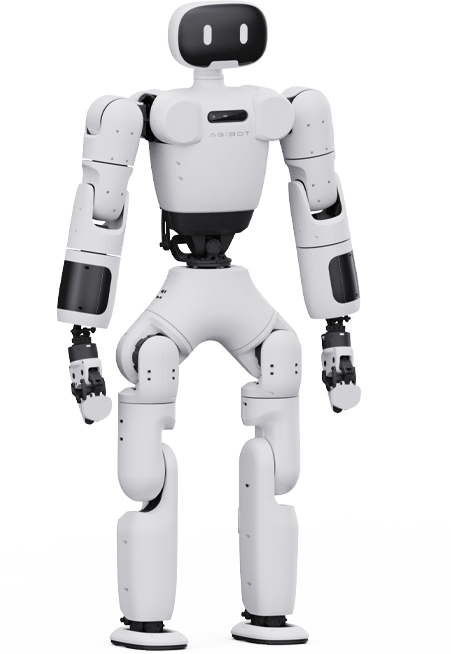
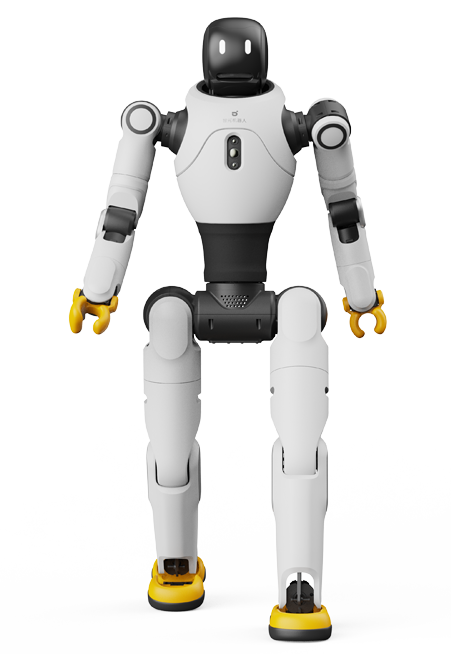
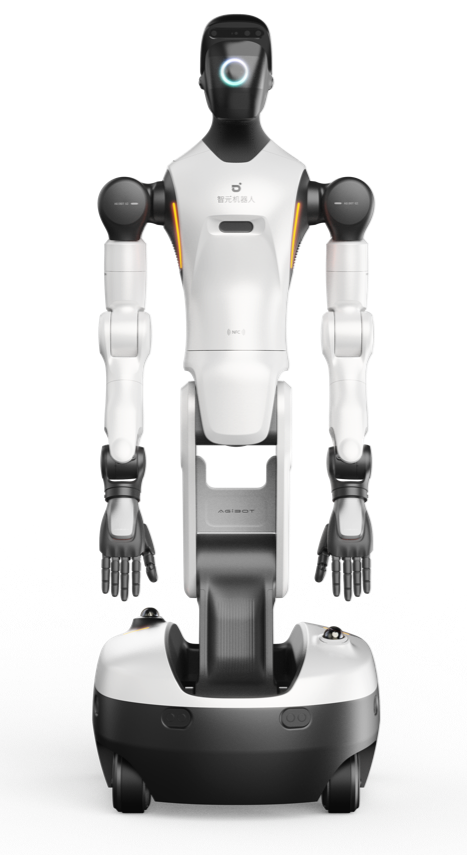
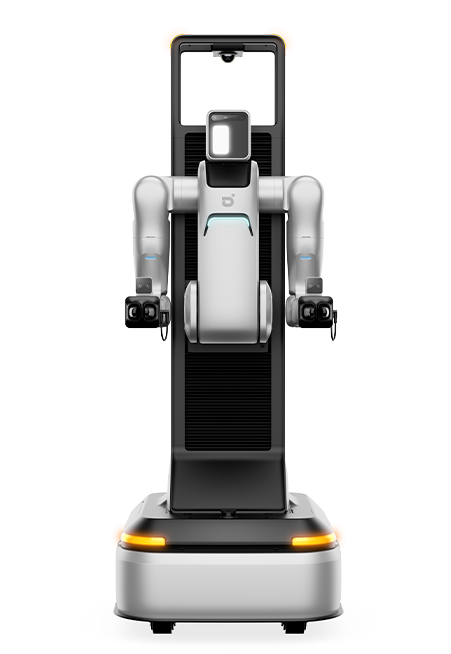
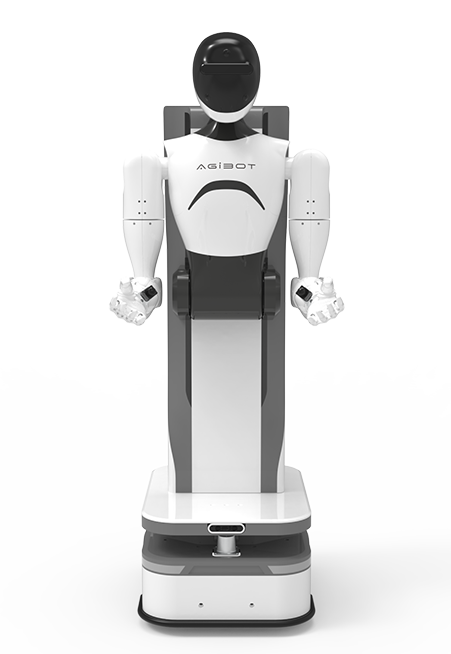
At the AGIBOT Partner Conference (APC 2026), AGIBOT presented a different approach, one that reframes the problem not simply as “how to build better robots,” but as “how to deploy them repeatedly, reliably, and at scale.” Central to this shift is a portfolio of seven standardized productivity solutions, developed through close collaboration with leading industry partners and validated in live commercial environments. These solutions reflect AGIBOT’s practical approach to commercialization: starting from real industry needs, refining capabilities through deployment, and gradually turning proven use cases into repeatable systems.


Standardization as a Commercial Breakthrough


Rather than treating robots as standalone products, AGIBOT has packaged hardware, embodied intelligence, operational data, and industry-specific know-how into modular, scenario-based systems designed for repeatable deployment. The goal is not to force standardization prematurely, but to identify the common operational patterns behind different customer needs, then turn validated deployment experience into standardized solution modules that can be replicated more efficiently over time.


Each of the seven solutions is built around real operational pain points identified together with leading partners in their respective industries. Rather than assuming a one-size-fits-all path to automation, AGIBOT works with customers to understand where embodied AI can create practical value today, where capabilities still need to mature, and how product performance can be refined through real-world deployment.


This approach reflects a more pragmatic path to commercialization. In some scenarios, robots can already deliver clear efficiency gains, cost reductions, or service improvements. In others, the value lies in solving labor constraints, improving operational consistency, collecting deployment data, or preparing for future scaling as technology and cost structures continue to improve. Across all seven solutions, the common logic is the same: start from real industry needs, validate performance in customer environments, and build trust through measurable, scenario-specific progress.


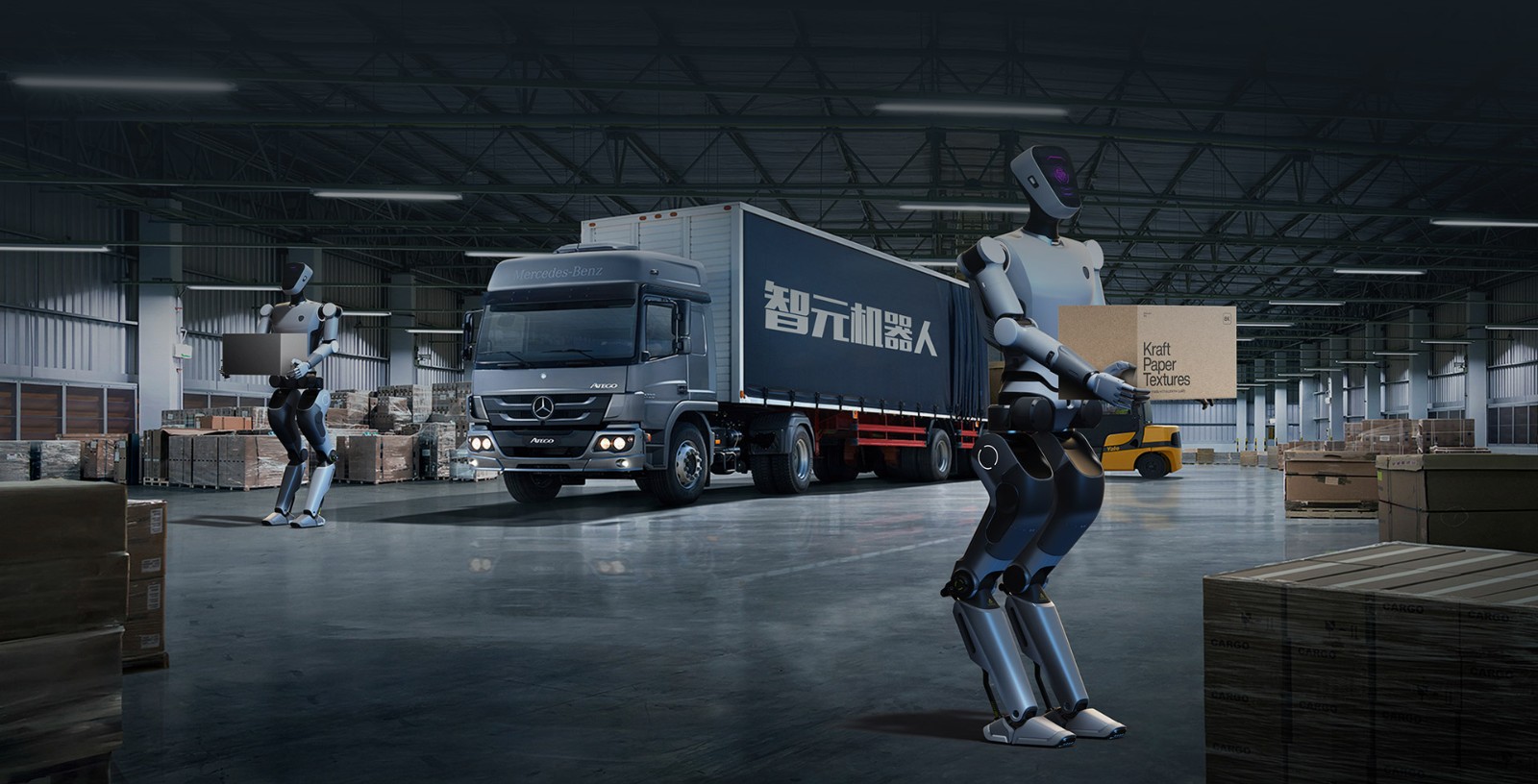
In production-line loading and unloading, AGIBOT’s systems are already operating at scale across electronics and semiconductor manufacturing. At Longcheer Technology, robots handle up to 5,700 units per day in continuous 24/7 operation. At HT-Tech and Intel, deployments process up to one million and 100,000 chips per day respectively, maintaining disk drop rates below 0.001%. These systems combine sub-millimeter precision with adaptive force control, replacing manual handling with consistent, high-speed execution in environments where error tolerance is minimal.


In industrial material handling, the company’s robots are integrated into complex factory logistics. At FULIN Precision, they transport hundreds of standardized containers per shift with sustained multi-hour operation, while at SAIC-GM, robotic systems manage battery cell handling with sub-second perception latency and near-continuous throughput. These deployments demonstrate the ability to coordinate across multiple production lines and integrate with existing MES and AGV systems, improving material flow without requiring full system redesign.


In logistics sorting and fulfillment, AGIBOT’s systems are being tested and deployed in complex sorting environments involving irregular, multi-category items, where the goal is to improve consistency, reduce labor intensity, and progressively close the gap with manual operations. At Damon, AGIBOT’s sorting and parcel-handling systems achieve up to 70% of human-level throughput, with second-pass success rates reaching 99%. At Xiaonan Intelligence, irregular soft package sorting has reduced labor costs by 50% while reaching processing speeds of up to 435 items per hour.


On the consumer-facing side, guidance and retail assistance systems are already generating measurable commercial impact. At Anta stores, deployments have driven a 20% increase in foot traffic and double-digit conversion gains, while at Haidilao restaurants, interactive queueing and guidance systems have boosted customer flow and engagement. In Guangzhou Metro, similar systems have reduced operational costs by 13% while resolving up to 80% of passenger inquiries through self-service interaction. These deployments illustrate how embodied AI can create value not only through efficiency, but also through improved service availability, customer engagement, and operational consistency.


In retail service stations, AGIBOT’s systems operate as autonomous service nodes, capable of continuous interaction, product handling, and customer engagement. At Digital China, stations run 24-hour interactive services, while at Yue Hua Entertainment, robotic systems complete grab-and-deliver cycles within seconds at near-perfect success rates. These solutions combine physical operation with expressive interaction, expanding the role of automation into hybrid service environments. At Silicon-based Ark, multi-dimensional services and group control enable coordinated multi-robot operations under fully unmanned conditions, integrating retail, entertainment, and visitor services into a single, scalable system.


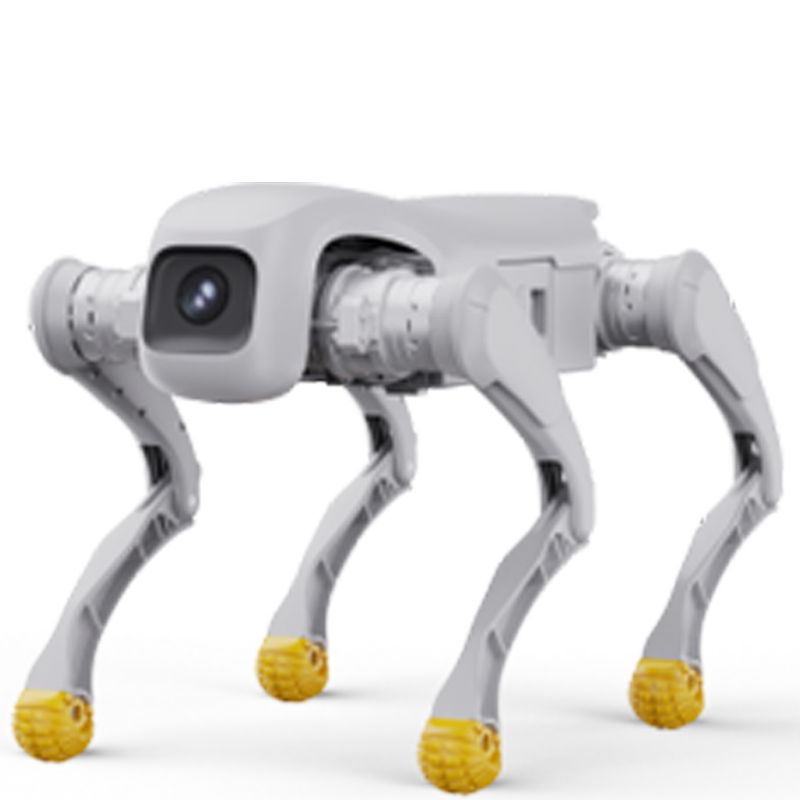
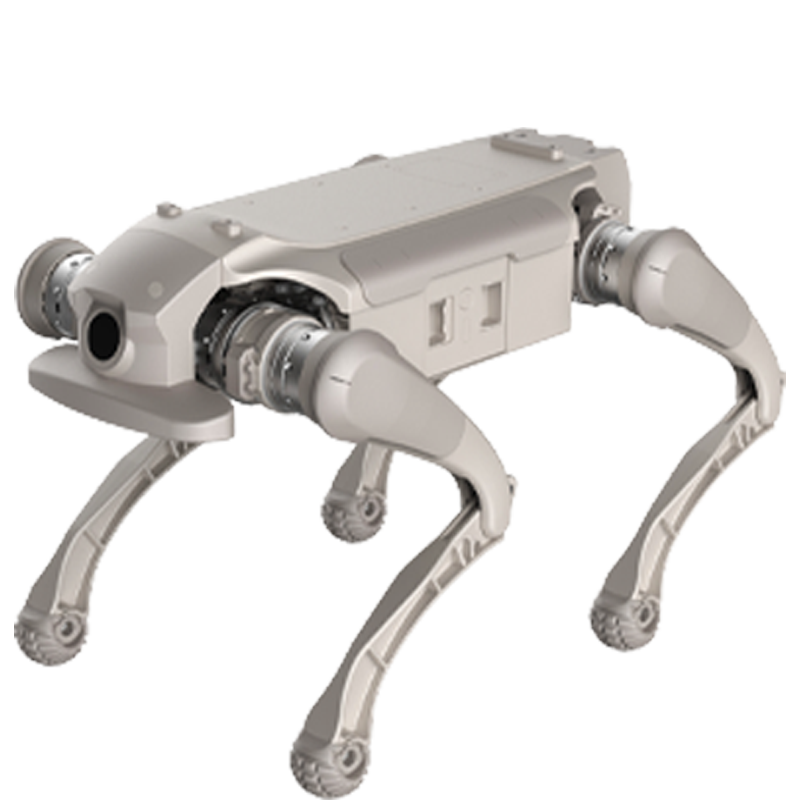
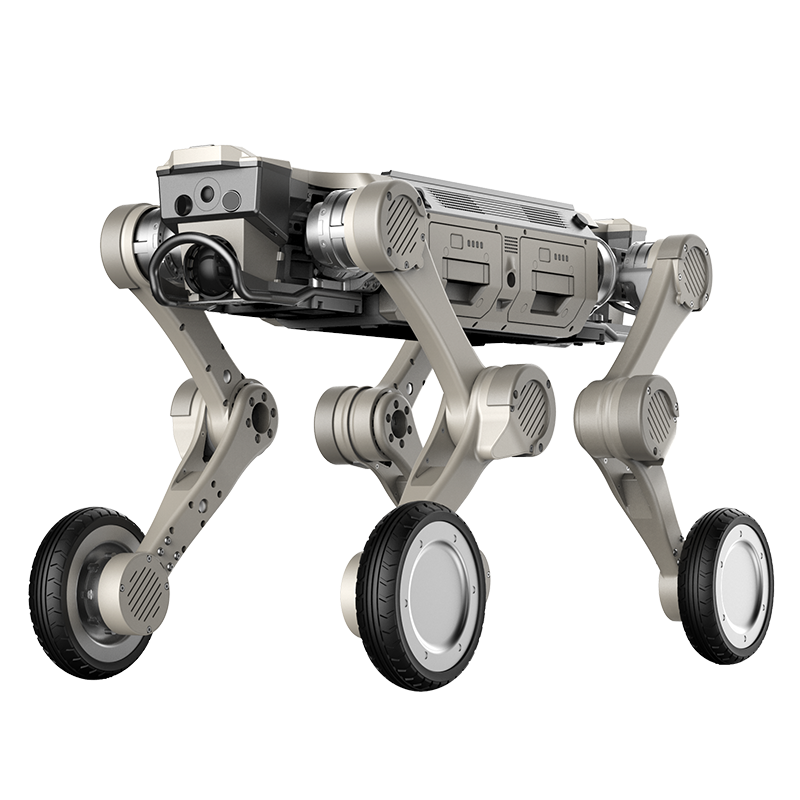
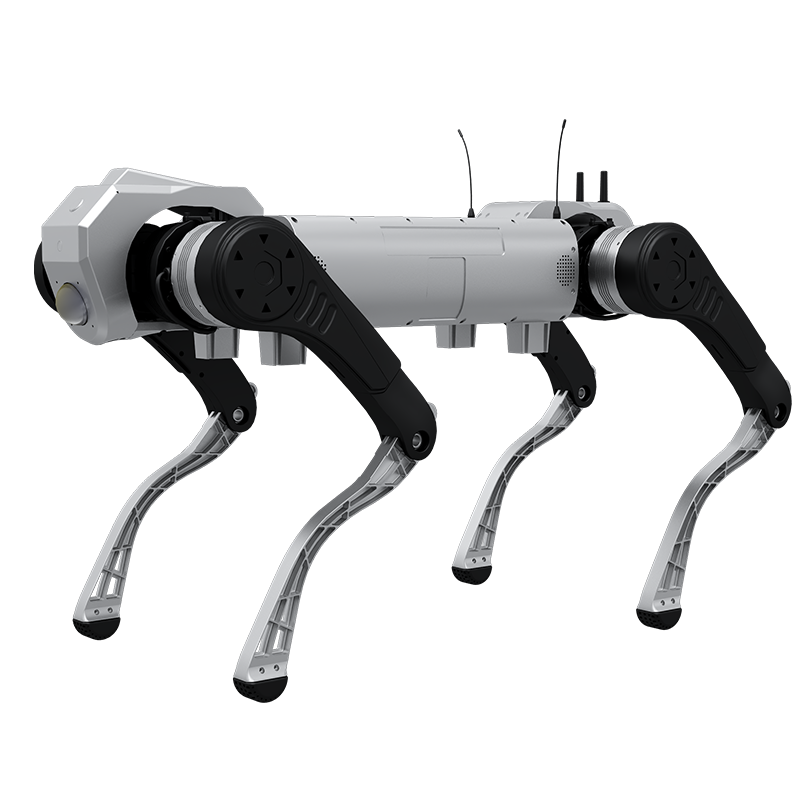
In security patrol and risk monitoring, deployments at State Grid facilities demonstrate a different dimension of value: reliability and coverage. Operating continuously across complex terrains, these systems achieve high attendance rates and fault identification accuracy, improving inspection efficiency multiple times over while significantly reducing maintenance costs. The ability to perform consistent, autonomous inspection under variable environmental conditions represents a key step toward infrastructure-level automation.


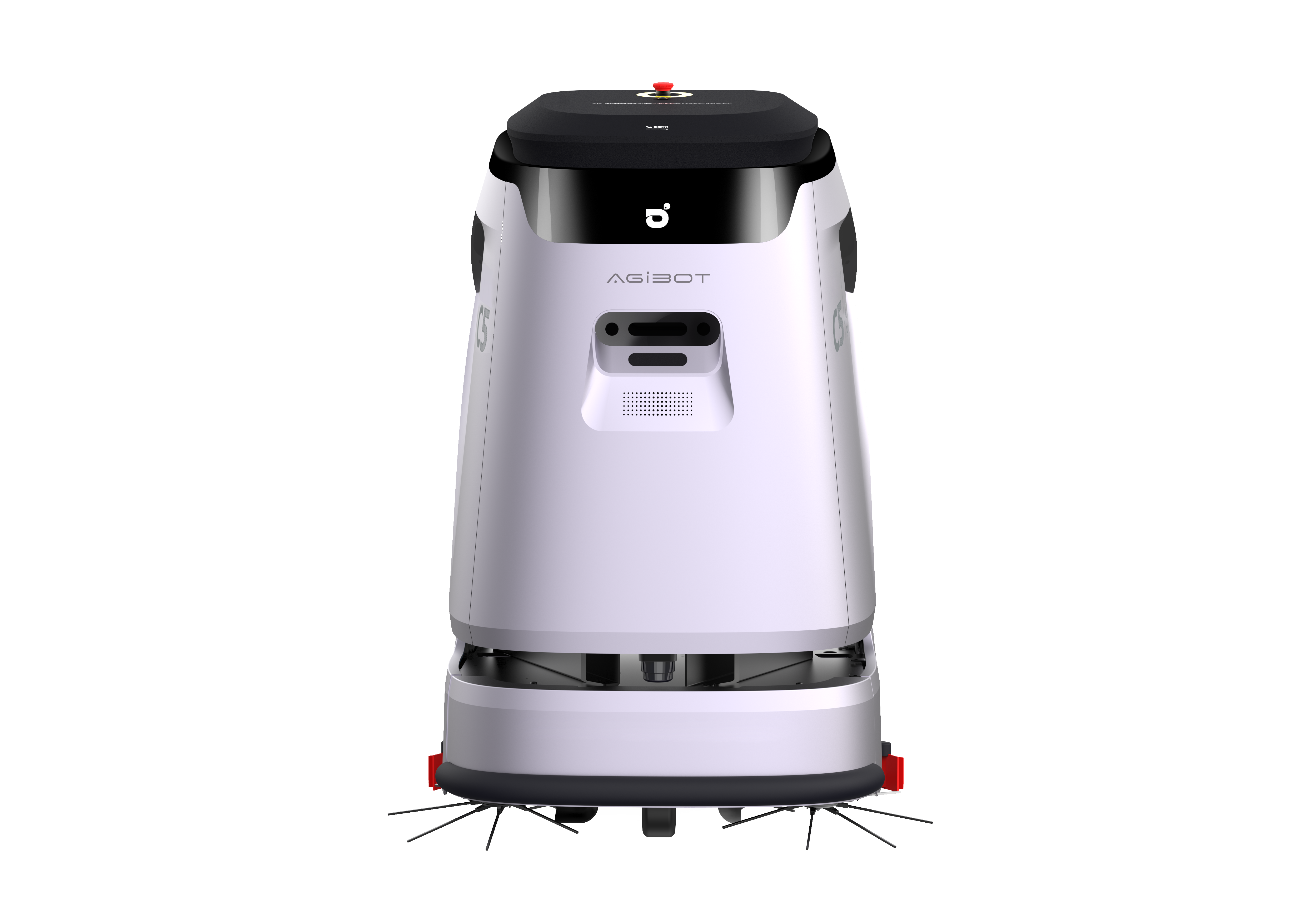
In industrial and commercial cleaning, AGIBOT’s systems deliver consistent performance in large, complex environments. At Shanghai Hongqiao International Airport, deployments support large-area cleaning with intelligent alerting, reducing overall costs by 18% while significantly improving cleaning frequency and quality. These results highlight a clear path to scalable automation in traditionally labor-intensive and non-standardized sectors.


From Individual Deployments to a Deployment Flywheel


What distinguishes these solutions is not only their individual performance, but the methodology behind them: working with leading customers to identify real pain points, using deployment as a way to refine product capabilities, and gradually converting accumulated field experience into repeatable solution packages.


By standardizing deployment packages across scenarios, AGIBOT is beginning to build what can be described as a deployment flywheel. As similar systems are rolled out across multiple customers and environments, operational data becomes more structured and reusable, models improve through cross-scenario learning, and integration efficiency increases over time.


This creates a compounding dynamic: each deployment does not start from zero, but builds on the accumulated experience of previous ones. In contrast to the traditional project-based model, where each deployment is effectively a new engineering effort, AGIBOT’s approach allows deployment itself to become a driver of technological progress, product maturity, and cost reduction.


Strategic and Financial Implications


The implications extend beyond engineering. Strategically, the shift from customized projects to standardized deployment packages addresses one of the core bottlenecks in embodied AI: the “pilot-to-scale gap.” By working from real customer pain points and validating solutions in operational environments, AGIBOT is building a commercialization model that is more grounded, repeatable, and aligned with how industries actually adopt new technologies.


Financially, this model aligns more closely with enterprise decision-making. Clear metrics, throughput improvement, error reduction, labor substitution, service availability, and asset utilization can all feed into ROI calculations that CFOs and operations leaders can evaluate. At the same time, AGIBOT’s approach recognizes that value is not created in the same way across every scenario. Some solutions may deliver immediate efficiency gains, while others create value through operational reliability, customer engagement, data accumulation, or long-term readiness for scale.


This transition is critical for the industry’s maturation. Without predictable value creation, large-scale adoption remains constrained; with it, embodied AI can move from isolated pilots toward broader, more trusted deployment across sites and sectors.


Broader Industrial and Societal Impact


Beyond commercial considerations, the emergence of standardized embodied AI solutions intersects with broader structural challenges. Across manufacturing, logistics, and service industries, labor shortages, rising costs, and the demand for continuous operation are reshaping operational models. At the same time, safety and quality requirements are increasing, particularly in environments where manual work is repetitive, hazardous, or precision-critical.


By automating these tasks, embodied AI systems have the potential to shift human labor toward higher-value activities while improving overall system reliability. In service environments, they can enhance consistency and availability; in industrial settings, they can stabilize operations under conditions that are difficult to sustain manually.


If scaled successfully, this transition could position embodied AI not as a niche technology, but as a foundational layer of modern productivity, analogous to the role that industrial automation and digital infrastructure have played in previous decades.


A Defining Phase for the Industry


The introduction of seven commercially validated, standardized solutions does not in itself resolve all the challenges facing embodied AI. Questions remain around generalization, cost structures, and long-term scalability.


However, it signals a shift in focus, from what robots are capable of, to how they can be deployed as reliable, repeatable systems.


In an industry long defined by technological milestones, the next phase may ultimately be determined by something more operational: the ability to work with real customers, understand real industry constraints, and deliver consistent value, not just once, but across different environments at scale.