

-
Technology
AGIBOT C Series
- Research
- About Us
- Store
- Contact Us
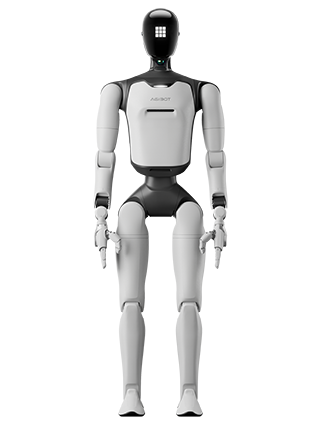
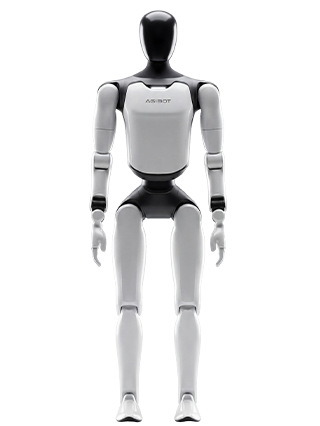
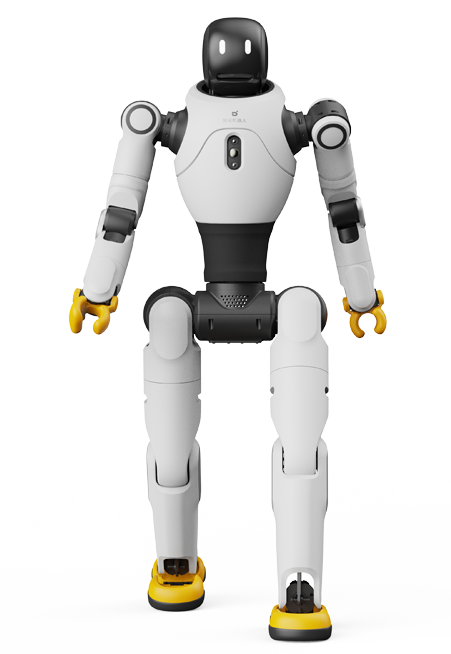
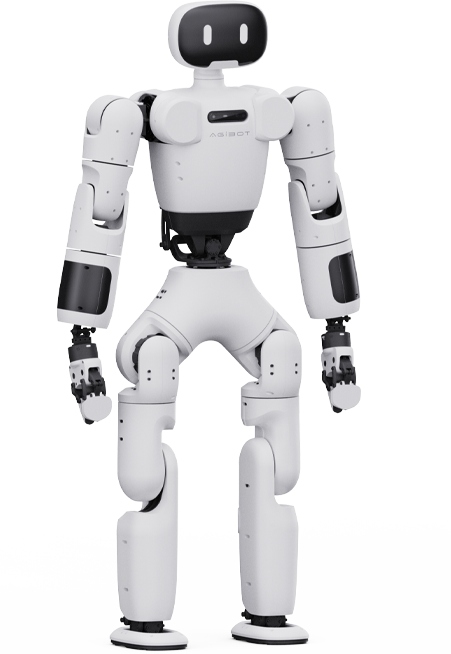
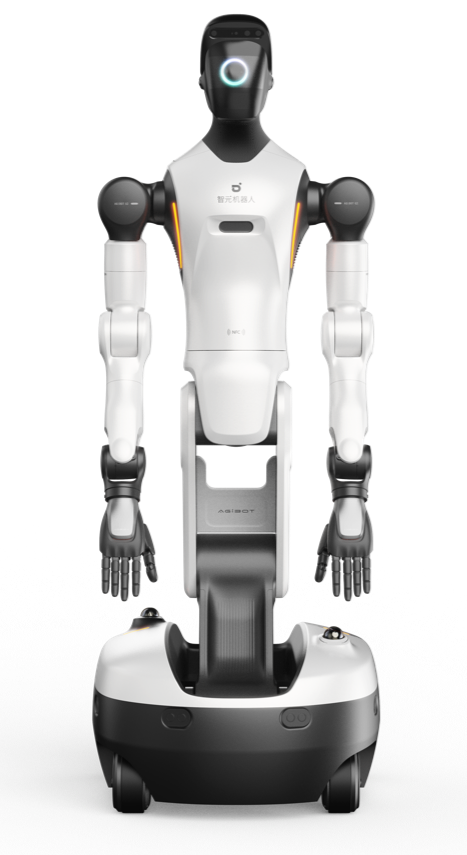
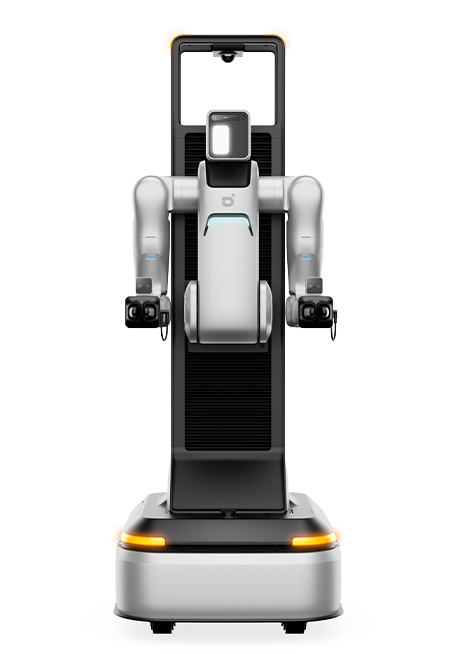
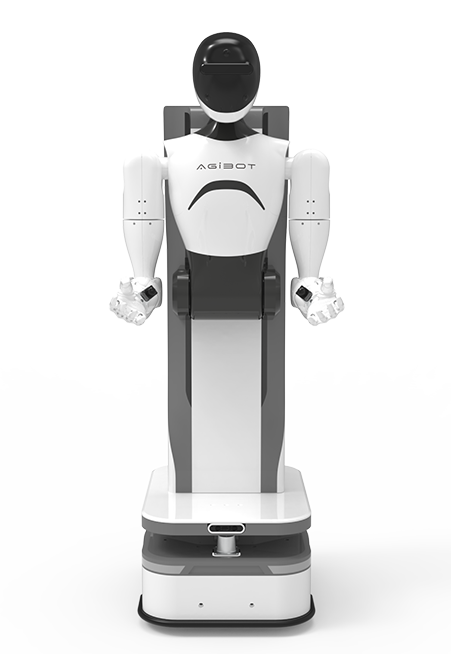
Four of the six robots pass a performance assessment as the trial puts customer service, retail operations and embodied AI capabilities to the test in a working store.
Six AGIBOT G2 wheeled humanoid robots completed a 24-hour trial at an operating convenience store in Shanghai's Xuhui District, performing a combined 1,730 tasks ranging from customer assistance and coffee preparation to shelf restocking and cleaning.
The trial ran from 10 a.m. on November 2 to 10 a.m. on November 3 and was livestreamed to an audience of more than two million viewers across online platforms. Four of the six robots passed the final performance assessment.
The event marked the conclusion of AGIBOT's AI WAVE technology showcase, launched on October 22. Following a series of releases spanning robotics data, simulation, AI models, hardware and operational software, the convenience store trial brought these technologies together in a real-world setting to examine how robots perform everyday tasks over an extended operating period. More broadly, the trial showed how embodied AI could move beyond controlled demonstrations and operate in the changing conditions of a live, customer-facing environment.
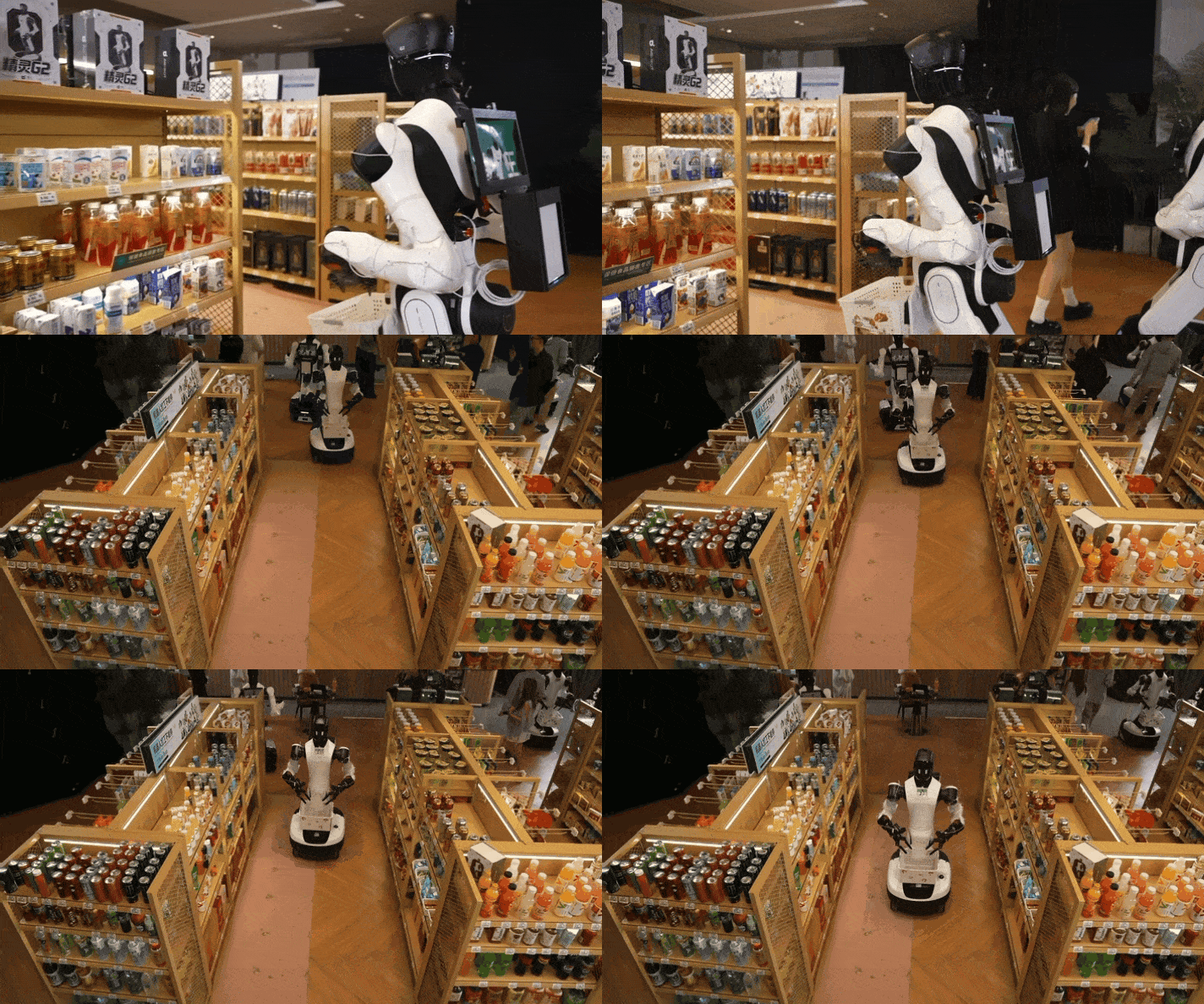
Six AGIBOT G2 robots working at a convenience store in Shanghai during the 24-hour trial.
The six G2 robots were assigned different responsibilities: customer assistance, shelf inspections, restocking, coffee preparation, checkout and hot food service, and store cleaning.
Over the 24-hour period, they completed 683 customer-service interactions, 369 product pickups and deliveries, 147 coffee orders, 126 breakfast servings, 277 shelf inspections and restocking tasks, and 128 table-cleaning tasks.
The trial covered four operating periods: the lunchtime rush, evening peak hours, overnight operations and the following morning's breakfast rush. Each period brought different demands, from handling customer requests during busy hours to maintaining store operations overnight.
The robots were assessed on their time on duty, task completion, customer feedback, response times and ability to handle unexpected situations. Four passed the final assessment, while two did not meet all the criteria.
Two evaluators also conducted rounds of practical tests based on situations robots might encounter while serving customers. In one test, they ordered regular and sugar-free Coca-Cola to check whether the robots could distinguish between similar-looking products. In another, they rearranged packs of chewing gum on a shelf and asked the robots to return them to their correct positions.
The evaluators also blocked an aisle with a person and a box to test whether the robots could identify obstacles and navigate around them.
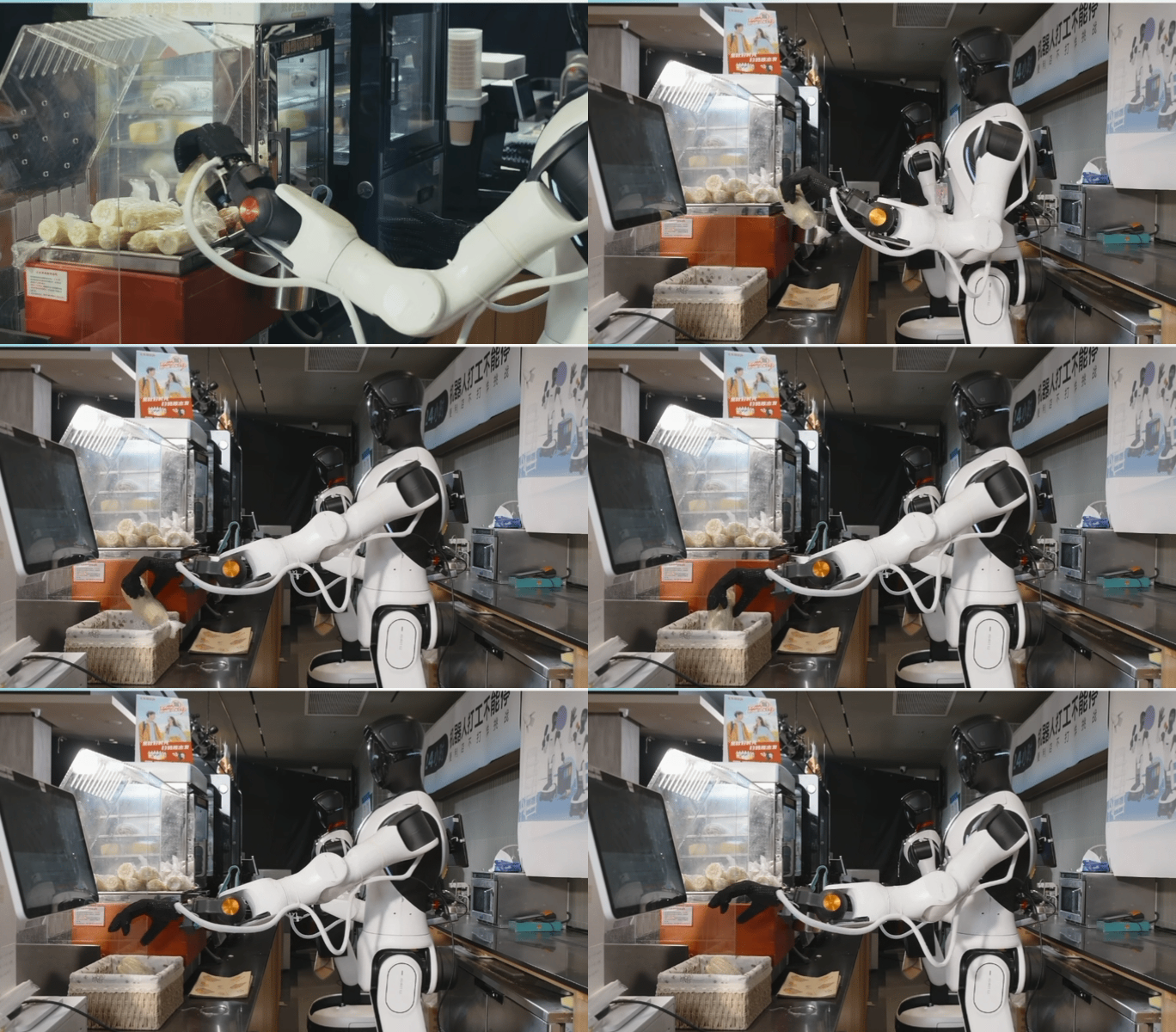
An AGIBOT G2 robot handling products during the convenience store trial.
A convenience store may appear to be a relatively straightforward environment for robots. Its layout is compact and many tasks follow standard procedures. Yet everyday activities such as picking up products, restocking shelves and preparing food require robots to adapt to small but frequent changes.
A bag of candy hanging at a slightly different angle can be difficult to grasp without disturbing nearby products. Handling a delicate item, such as a slice of cake, requires careful control of gripping force to avoid dropping or damaging it.
Unlike a controlled laboratory, an operating store presents constantly changing conditions. Customers move through the aisles, products are picked up and returned, and items vary in position, orientation and packaging. Even when a robot repeats the same task, the conditions may differ from one attempt to the next.
During the trial, the G2 robots demonstrated several capabilities designed to address these challenges. They used real-time visual information to identify misplaced merchandise and return it to designated shelf positions rather than relying solely on preset coordinates.
A robot assigned to restocking detected gaps on shelves and replenished products without a specific prompt. In the cleaning area, another robot distinguished spills from countertop patterns and selected appropriate tools for cleaning.
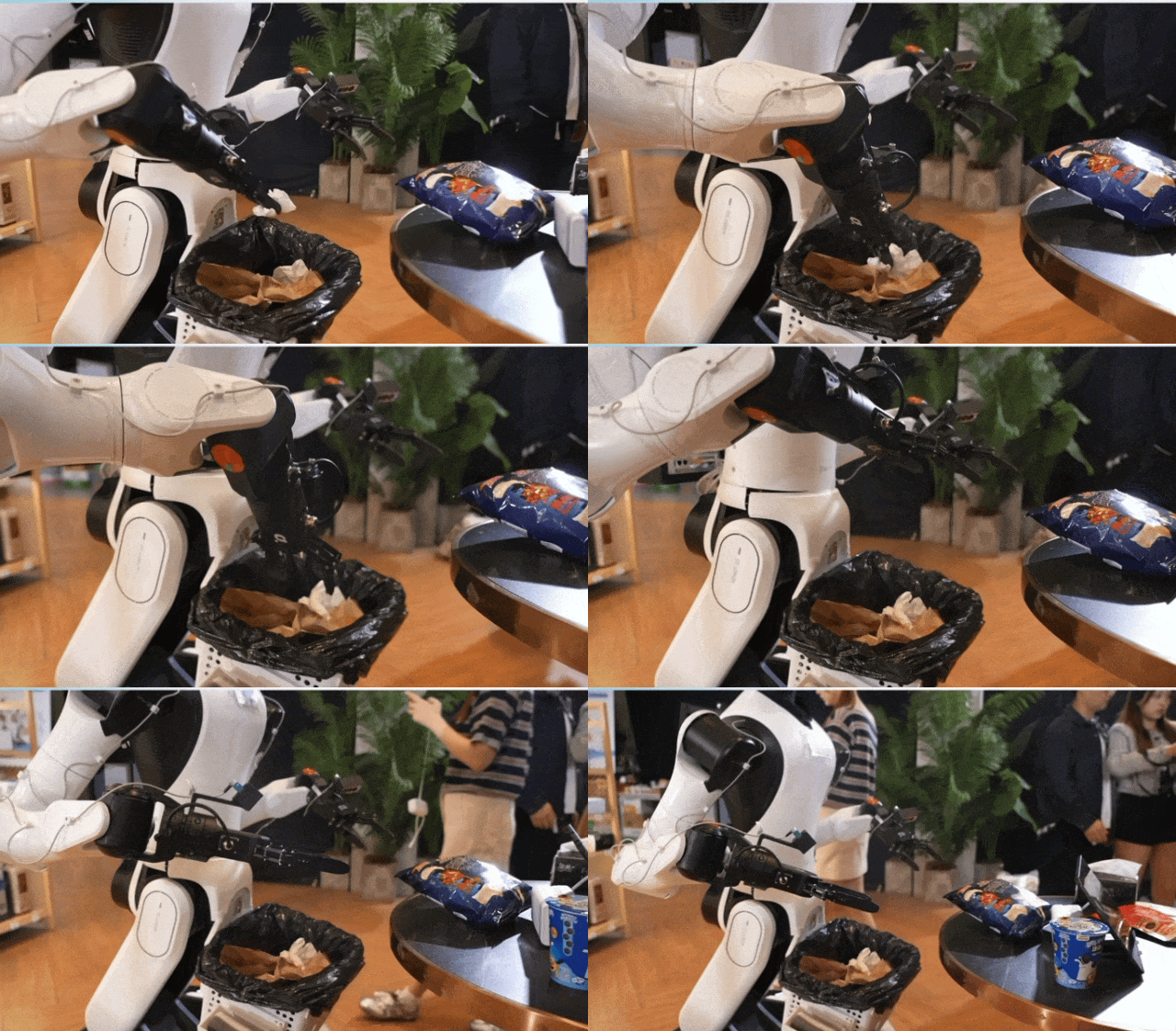
An AGIBOT G2 robot cleaning a countertop during the convenience store trial.
These tasks tested more than individual movements. They required the robots to perceive their surroundings, make task-specific decisions and adjust their actions as conditions changed.
The trial also tested how AGIBOT's Genie Master embodied AI agent framework could support task coordination, error correction and learning from operational experience.
Even routine store tasks do not always go as planned. A robot may fail to grasp an item correctly, encounter an unexpected obstacle or need to adjust its movements. Beyond completing individual tasks, the trial examined how robots could respond to these situations and use the resulting feedback to improve future performance.
Genie Master provides a shared framework for coordinating the six robots and connecting their actions with subsequent analysis and learning.
Through the Embodied Execution Protocol (EEP), Genie Master links task planning, execution and feedback. The system organizes work according to each robot's capabilities and the conditions in the store. Robots then perform their assigned tasks using action policies and real-time observations, with execution results returned to Genie Master for analysis and troubleshooting.

AGIBOT's Genie Master framework connects task planning, robot execution and operational feedback.
The framework also supports learning from previous attempts. By reviewing successful and unsuccessful task executions, it can retain relevant experience in long-term memory for use in similar situations. Effective adjustments can also be converted into training data to help refine the robots' action policies.
This approach is intended to help robots build on previous experience rather than treating each task as an isolated operation. AGIBOT has been using operational feedback to improve G2 performance on tasks requiring precise manipulation, including additional practice during quieter overnight periods.
Plans to Expand Testing Across Real-World Applications
The convenience store trial brought together AGIBOT's robotics hardware, AI models, simulation technologies and operational systems in a single working environment.
Beyond the number of tasks completed, the trial examined practical questions about robot performance: whether robots could carry out assigned duties over an extended period, how they responded to unexpected problems and whether experience gained from previous tasks could be applied to new situations.
AGIBOT plans to continue testing its robots across additional roles and real-world environments, using operational feedback to improve reliability, task execution and adaptability.
As robots take on a wider range of responsibilities, the company will also assess which capabilities and operating practices can be transferred between tasks and replicated across different settings. These findings will help guide the next stage of development toward more consistent and scalable real-world deployment.
For more information, please visit AGIBOT.com and follow AGIBOT on:
X: https://x.com/AGIBOTofficial
LinkedIn: https://www.linkedin.com/company/agibot/
YouTube: https://www.youtube.com/@AGIBOTofficial
Instagram: https://www.instagram.com/agibotofficial/
TikTok: https://www.tiktok.com/@agibotofficial
Facebook: https://www.facebook.com/AGIBOTofficial/
About AGIBOT
AGIBOT is a pioneer in the global general-purpose AI robotics industry, with its core technology focused on embodied AI. AGIBOT's "Three Intelligences in One" architecture integrates Locomotion Intelligence, Interaction Intelligence, and Manipulation Intelligence into a unified embodied system. Its portfolio spans humanoid robots, quadrupeds, dexterous systems, and commercial cleaning solutions. In September 2026, AGIBOT announced that its 20,000th robot had rolled off the production line.